MLS's Declining Influence on US World Cup Roster: A New Era of Development
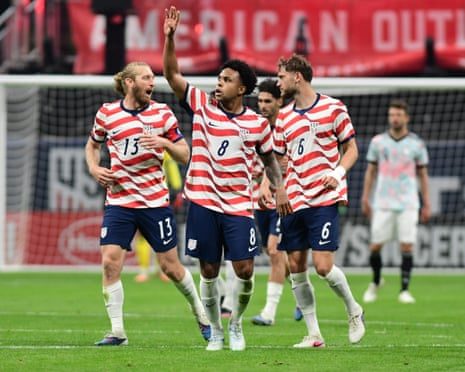
The United States men's national team (USMNT) has witnessed a significant decline in the representation of Major League Soccer (MLS) players at the World Cup. In the inaugural World Cup after MLS's formation, the 1998 tournament in France featured 16 MLS players on the 22-man roster. However, this trend has steadily decreased over the years. 2002: Average of 5.4 MLS players in five matches. 2006: Dropped to 3.33. 2010: Further declined to 2. 2022: Featured only 1 MLS player, marking the first time since MLS's inception that no MLS players started in a World Cup match. The 2014 World Cup saw a temporary rise, with an average of 4.75 MLS players starting, attributed to high-profile signings like Clint Dempsey and Michael Bradley. As the upcoming World Cup approaches, expectations suggest that only two MLS players may start: Matt Freese or Matt Turner in goal, and Tim Ream in defense. Despite the reduced direct representation, the influence of MLS remains significant. A notable 19 out of 27 players on the predicted World Cup roster have been developed through MLS academies. This indicates a shift in focus: while fewer players may be starting, the league's role in nurturing talent is evident. The current USMNT may lack a robust MLS presence, but its foundation is rooted in MLS development, reflecting a strategic long-term investment in youth rather than merely attracting established stars. This shift could have implications for fan engagement, but it also signifies an evolving landscape where MLS's impact is felt indirectly through the players it has cultivated.
Source: The Guardian Sport - 2026-04-15